
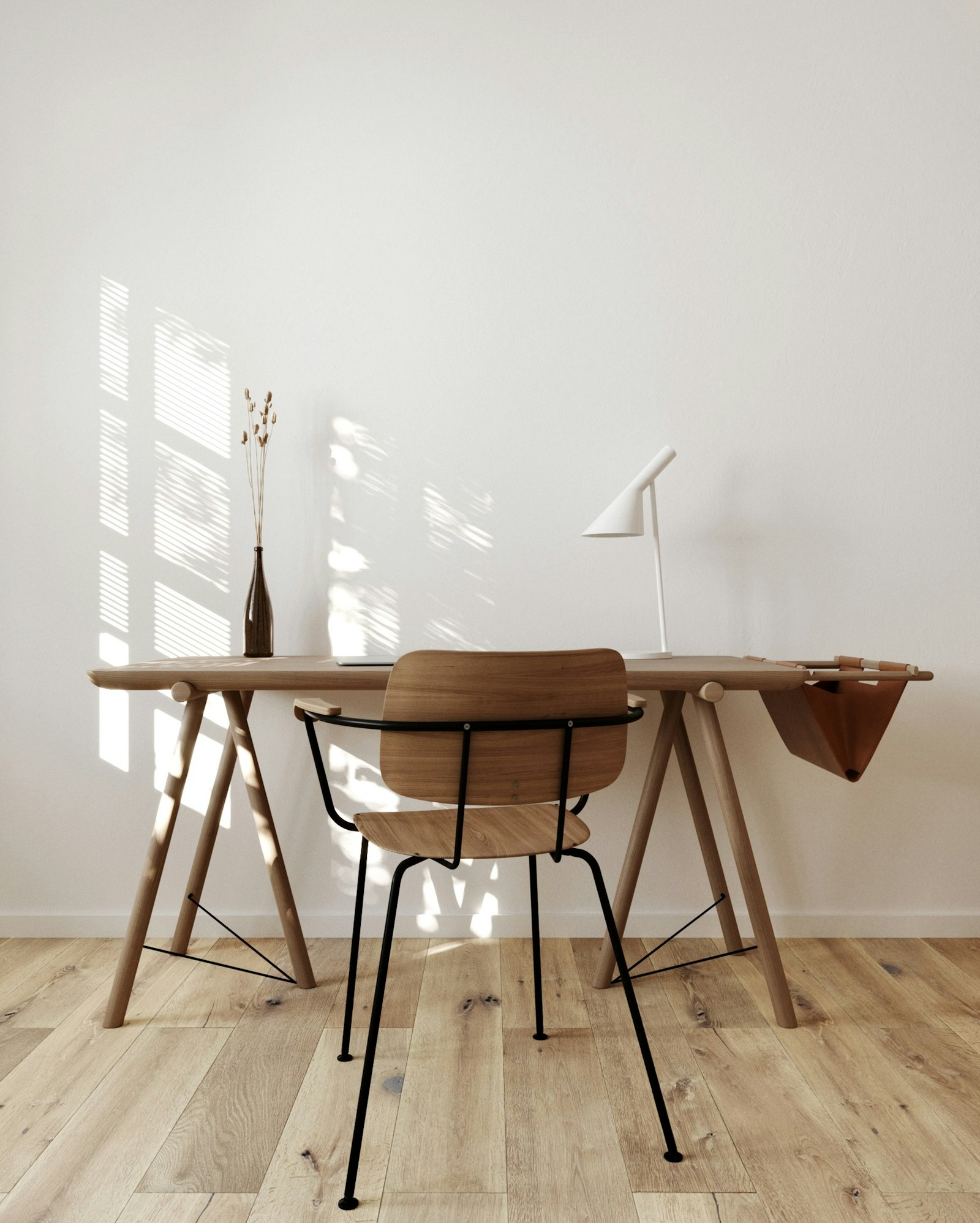
In a painting, negative space is the area around the subject — the part the painter chose not to fill. In an interior, it’s the same thing: the room around the furniture, the wall above a sofa, the unstyled corner.
It is easy to underrate, and most interiors do.
Why empty walls work harder than full ones
A fully decorated wall asks you to look at everything at once, which means you end up looking at nothing for very long. A wall with one painting, well-lit and properly hung, becomes a fixed point your eye returns to all day.
The same dynamic operates at the level of an entire room. If every surface is occupied, the room reads as anxious. If two-thirds of the surfaces are empty, the occupied third becomes a deliberate, considered choice.
The three-foot rule
Designers I trust use a simple test: stand three feet back from each piece of furniture and ask whether there’s air around it. A sofa pushed against an end table that’s pushed against a lamp that’s pushed against a plant is dense — visually loud even if the objects themselves are quiet. Pull each thing forward by six inches and the room exhales.
Where to leave space deliberately
- Above eye level on every wall — at least one stretch of bare surface in each room.
- Around the dining table — chairs should be able to slide out without negotiating with another object.
- In corners — corners that hold a plant or a floor lamp should hold only that.
- Above a sofa — either one large piece centered, or nothing.
The cost of filling space
Every object you add to a room is a small subtraction from every other object’s visibility. The math is brutal: ten pieces on a shelf reduce each piece to one-tenth of the attention a single piece would get. Curators understand this; designers sometimes forget.
Treat negative space as a material with a budget. Spend it carefully, and the room you furnish will read as finished — not because it has more things, but because the things it has can finally breathe.
4 responses
Share your perspective below — replies welcome.
The conversation on this one is closed.