
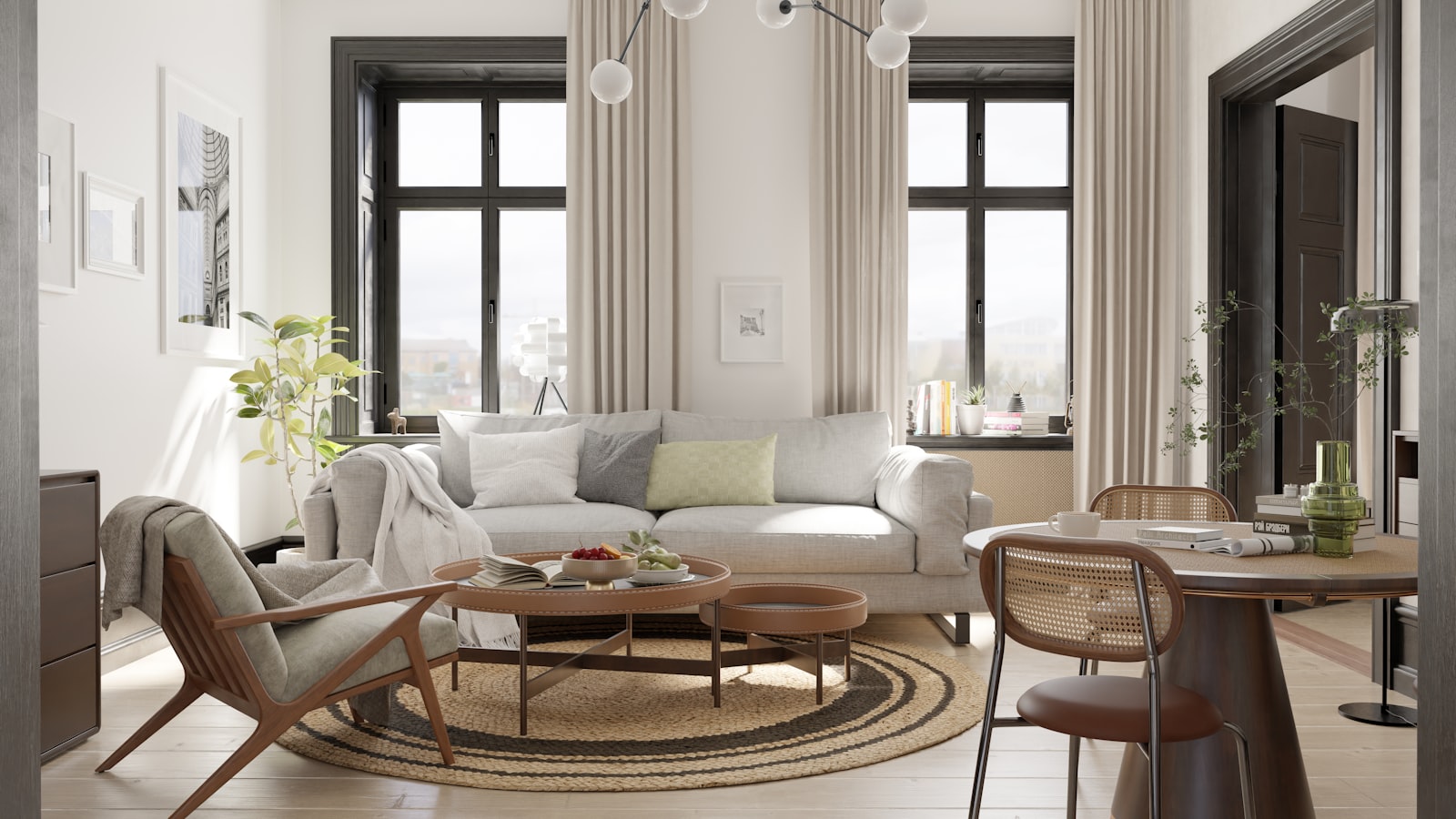
Mid-century modern has had a longer second act than almost any other design movement. It came back into fashion in the 2000s, became a cliché by 2015, and is now somewhere in the cycle between commodity and classic.
Which means it’s a good moment to ask what’s actually worth keeping from the style and what was always more myth than substance.
What the originals got right
The first wave of mid-century designers — Saarinen, Eames, Wegner, Jacobsen — were solving a real problem. Post-war housing was smaller, materials were limited, and the audience was a generation that had no patience for ornament after seeing the world ornament had built. So the furniture became light, functional, and dimensionally generous on the surfaces that mattered.
An Eames lounge isn’t beautiful because it’s iconic. It’s beautiful because the curve of its plywood shell matches the curve of an actual human spine, and the cushions are sized for the way actual people sit.
What the revival got wrong
The revival mostly imported the silhouettes and skipped the substance. A walnut credenza is striking in a magazine photograph. In a real room, it’s a piece of storage furniture, and if you bought it because it photographed well, you’ll resent it within five years.
The other failure is mixing genuinely mid-century pieces with their cheap reproductions and a couple of contemporary items, and assuming the room reads as cohesive. It rarely does. The eye spots inconsistencies in materials and proportions even when the silhouettes match.
How to use mid-century today without it feeling like a costume
Buy one or two real pieces, then stop
A genuine Børge Mogensen sofa is worth what it costs. Surround it with simpler, less-stylized pieces from the same color and wood family, and the sofa reads as the heart of the room rather than as a museum loan.
Avoid the “set”
A matched mid-century dining set in a mid-century-styled house with a mid-century light fixture is a costume. A single mid-century chair in an otherwise contemporary room is a deliberate choice.
Respect the original scale
Mid-century rooms had lower ceilings, smaller windows, and tighter floor plans than most modern homes. The furniture was designed for those proportions. Putting a low-slung mid-century sofa in a double-height living room with floor-to-ceiling windows is a scale mismatch — the sofa looks marooned, not minimal.
The pieces that have lasted from the 1950s are the ones that solved problems that haven’t gone away. Use them where they still solve those problems, and you have something timeless. Use them as wallpaper, and you have a trend, dated the moment you bought it.
Join the discussion
The conversation on this one is closed.