Materials
Plaster, Linen, Oak: A Three-Material Room

hokami
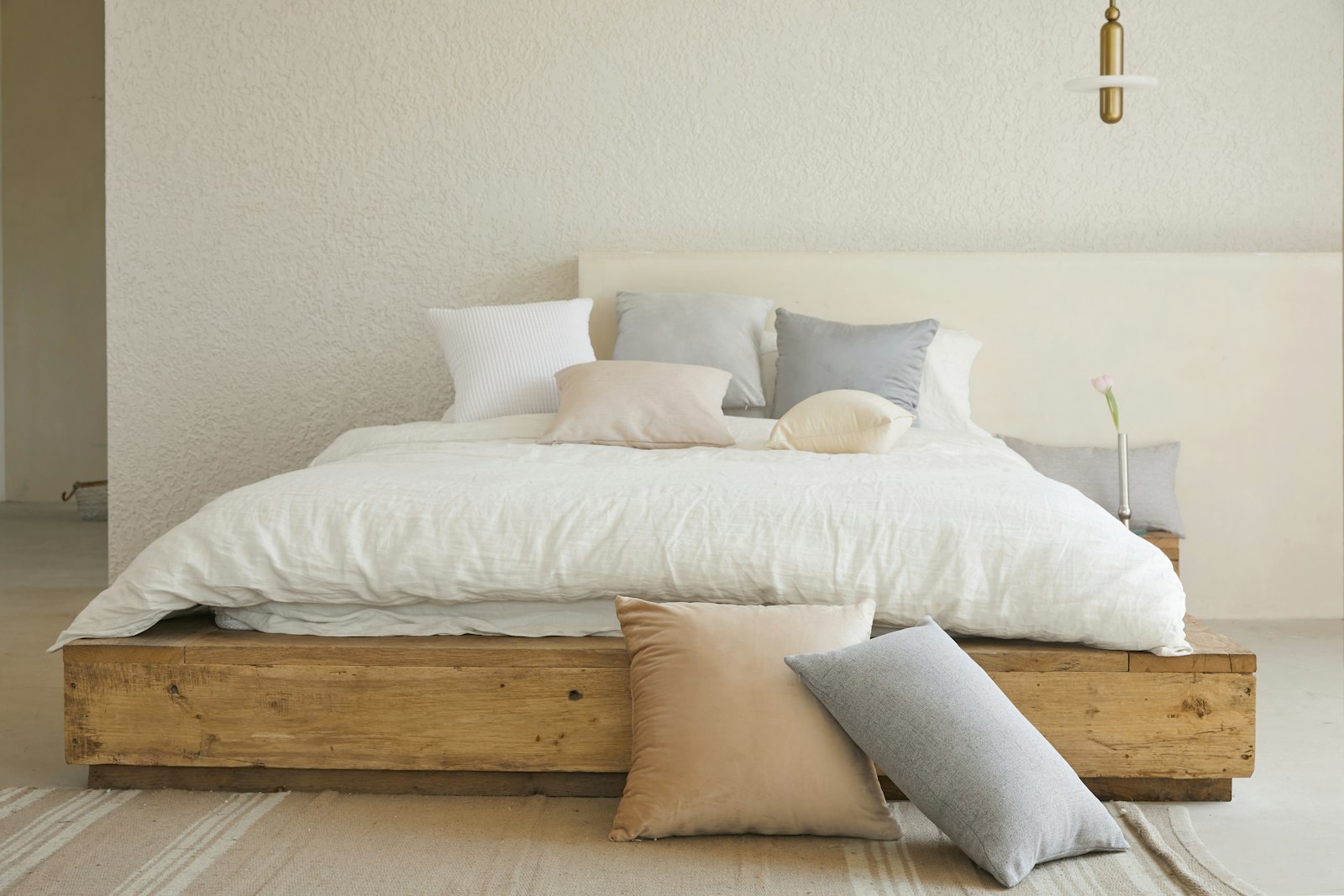
Some of the calmest rooms I know are built around just three materials: lime plaster on the walls, washed linen for everything soft, and oiled oak for everything wood. That’s it. No marble. No brass. No leather. Three materials, used consistently, and the room reads as resolved.
It’s a useful constraint, and it’s worth understanding why it works.
Why three is the right number
One material is a gallery — too austere for a room people actually live in. Two materials read as flat, because there’s no third element to mediate between them. Three materials give you enough variation that the eye stays interested, and few enough that nothing competes for attention.
Add a fourth, and you start managing relationships between every pair of materials. Add a fifth, and the room slips into incoherence unless someone is actively curating it. Three is the upper bound for a quiet room.
Why these three
Plaster: matte, alive, forgiving
Lime plaster never looks the same in two lights. In morning sun it goes warm and pinkish; in overcast afternoon it cools toward gray-blue. That subtle shift gives the room a quiet animation that paint simply cannot reproduce. It also forgives uneven walls and grows more interesting as it ages.
Linen: structured but soft
Cotton is too smooth, wool is too heavy, and synthetic fabrics never quite read as fabric. Linen sits in a sweet spot — it drapes properly, it wrinkles in a way that looks intentional, and it takes natural dye into deep, undyed-looking shades. A linen sofa, linen curtains, and linen pillows are not redundant; they’re a chord.
Oak: a wood that lets the room breathe
Oak is light enough to keep a room bright but warm enough to keep it from feeling sterile. Oiled rather than lacquered, it ages into character. Used for the floor, a dining table, and one accent shelf, it gives the eye a wood thread to follow through the space without ever calling attention to itself.
A note on consistency
The trick is consistency at the species and finish level, not just the material level. Two different oaks — one pale, one fumed — will fight each other across a room. Two different linens — one warm cream, one cool gray — will too. Pick one variant of each material and commit.
What you get back, when you do, is a room that doesn’t need decoration. The materials are the decoration, and they’ve been doing it the whole time.
Join the discussion
The conversation on this one is closed.