
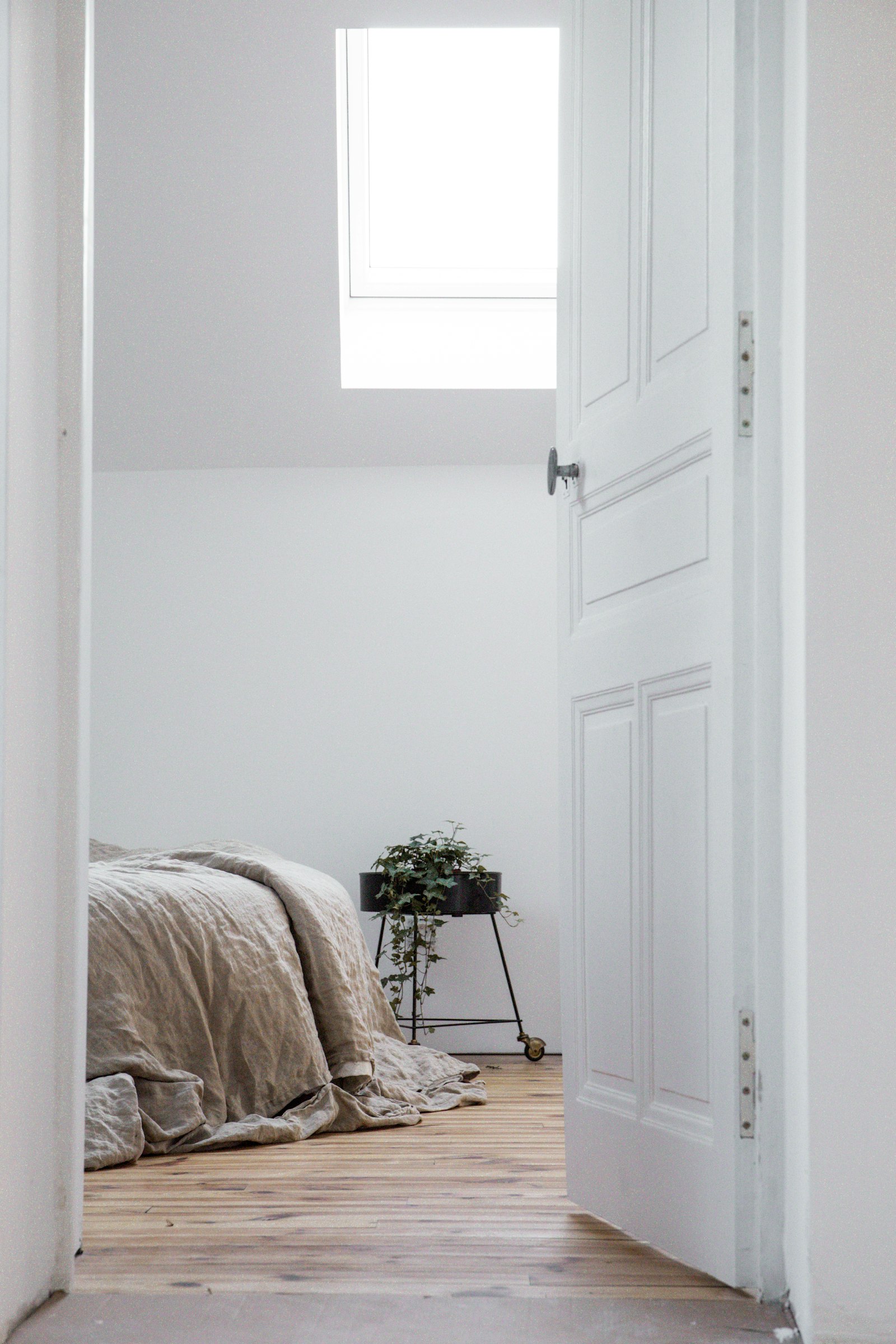
The most common complaint about all-neutral interiors isn’t that they’re boring. It’s that they feel cold — the kind of cold that pushes you toward the warmest chair and keeps you there.
The fix isn’t to abandon neutrals. It’s to choose them more carefully.
The undertone problem
Every gray, beige, or white has an undertone — a hint of blue, green, pink, or yellow buried under the surface. Cool undertones (blue, green) read clinical under daylight. Warm undertones (yellow, pink, red) read inviting.
The mistake people make is pairing two neutrals with conflicting undertones — a cool gray sofa against a warm beige wall — and assuming the room will read as neutral. It reads as wrong, and they spend years not understanding why.
Two rules for warmth
Stay on the same undertone family
If your walls have a yellow undertone, your floor, your sofa, and your largest pieces of furniture should also have yellow undertones. The palette stays warm because nothing breaks the warmth. You can layer in small cool-undertone accents (a black lamp, a steel side table) as deliberate contrast, but the bulk has to agree.
Choose materials with built-in warmth
Linen warms a room. So does oiled oak, wool, leather, and unglazed ceramic. They each have natural color variation, which the eye reads as warmth without anyone needing to add a yellow cushion. If the bones of the room are warm materials, the palette can stay strictly neutral and the room will still feel inviting.
Test it on a cloudy day
Sunlight forgives a lot. Overcast light shows you what the room actually feels like the other 60% of the year. Pull a sample of every major surface — wall, floor, sofa, drapery — into the room on a gray afternoon and look at them side by side. If anything reads as a different temperature than the others, replace it before you commit.
A warm neutral palette is harder than a colorful one because every choice has to agree with every other choice. But when it works, you have a room that feels considered without ever announcing itself — and that lasts longer than any season’s color trend.
Join the discussion
The conversation on this one is closed.