Style Guides
Five Principles of Scandinavian Minimalism

hokami
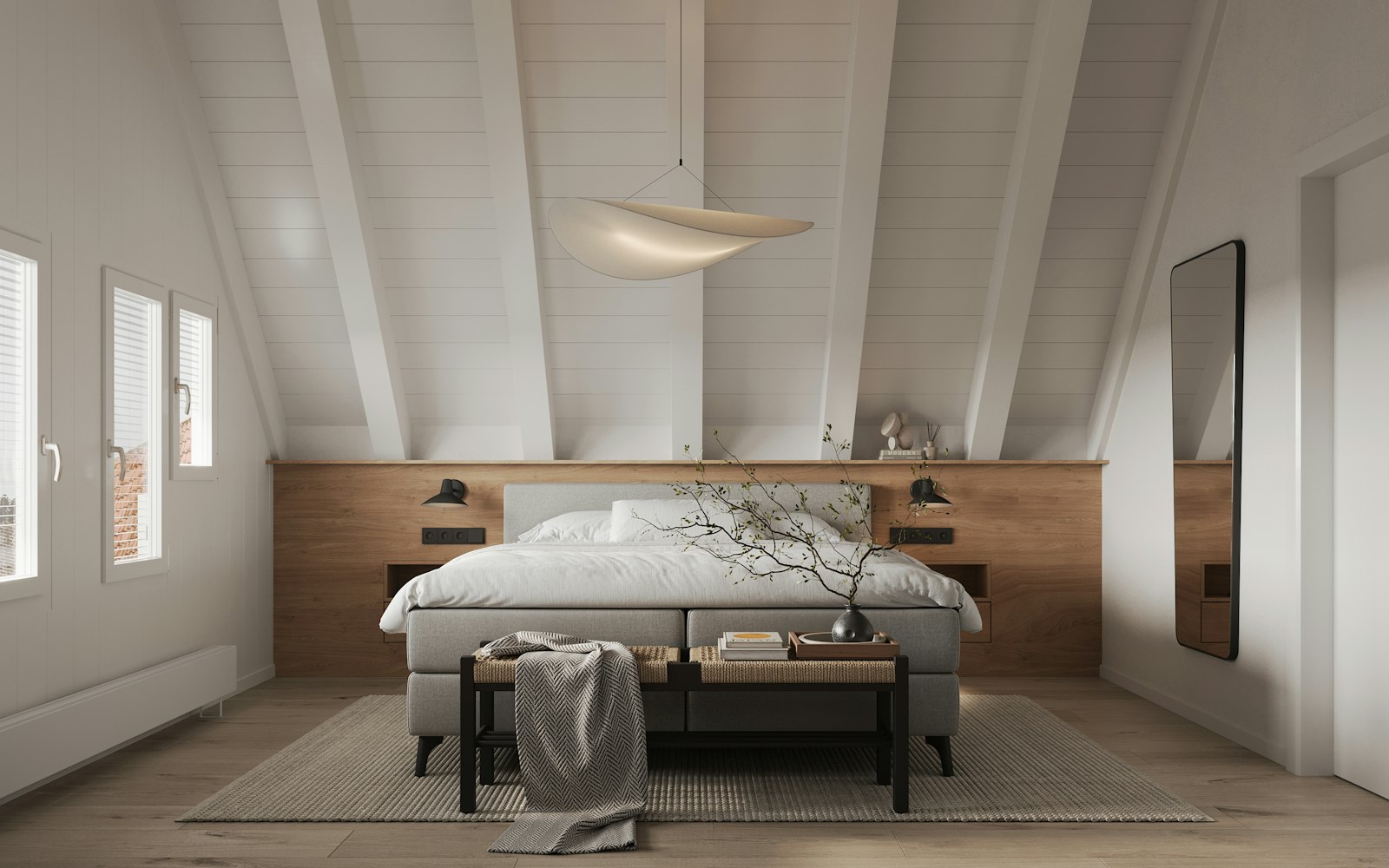
Walk into a room that gets Scandinavian minimalism right and the first thing you notice is what isn’t there. No clutter on the surfaces. No decoration competing for attention. Just light — clear, even, generous — and a handful of objects chosen with conviction.
The style emerged in the 1950s as a quiet rebellion against ornament, and the same five principles still hold today. Each one is less about what you add than what you’re willing to leave out.
1. Light is a material
In the long northern winters, daylight became precious enough that designers treated it as a building material. Pale floors. Whitewashed walls. Windows kept clear of heavy drapes. The goal is to bounce whatever light arrives through the room until every corner is awake.
2. One wood, one tone
Walnut next to oak next to cherry creates visual noise. A Scandinavian room usually commits to a single wood species and a single finish — oak, often, brushed and oiled rather than lacquered. The eye stops looking at the floor and starts looking at the room.
3. Negative space is the design
The empty area around a chair matters as much as the chair itself. Spacing is generous because air around an object is what lets it read as a deliberate choice rather than as furniture you happened to keep. If you can’t add space, you have too much furniture.
4. Texture replaces color
When the palette is muted, texture does the work that color does elsewhere. Linen against wool. Polished concrete against raw oak. A ceramic bowl on a soapstone counter. The contrasts are tactile rather than chromatic, and they make a quiet room feel inhabited.
5. Function is the ornament
Hans Wegner’s chairs aren’t beautiful because they’re decorated. They’re beautiful because every line is doing structural work, and nothing is doing anything else. The same logic scales to a room: if an object isn’t earning its place by use, it’s a candidate for removal.
“Have nothing in your house that you do not know to be useful, or believe to be beautiful.” — William Morris, decades before Scandinavia ran with the idea.
None of these principles are about deprivation. They’re about taking enough away that what remains can finally be seen.
Join the discussion
The conversation on this one is closed.